How to Measure Your Bra Size at Home (Step-by-Step Guide That Actually Works)
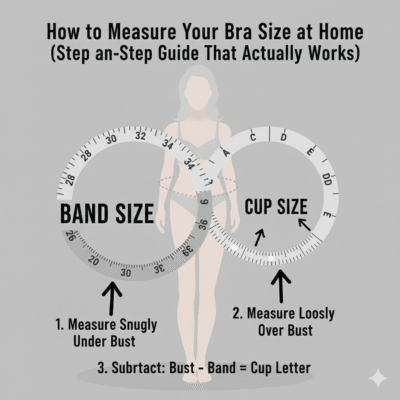
Wearing the wrong bra size is far more common than most people realize — and it’s not just uncomfortable, it can affect your posture, confidence, and even cause back or shoulder pain. The good news? You don’t need a professional fitting or a lingerie store visit to get started. Learning how to measure your bra size at home is surprisingly simple, accurate, and empowering when done the right way.
In this guide, we’ll walk you through step-by-step instructions to measure your band and cup size correctly, explain how bra sizing really works (including sister sizes), and help you spot signs that your current bra doesn’t fit as well as it should. Whether your body has changed due to weight fluctuations, pregnancy, or lifestyle shifts — or you’ve simply never measured properly before — this article will give you everything you need to find a bra size that truly fits.
Whether you’re buying bras online, dealing with discomfort, or simply want better support, learning the basics of bra measurement empowers you to make more informed choices. Comfort, support, and confidence all start with the right fit — and it’s easier to achieve than most people think.
Why Knowing Your Correct Bra Size Actually Matters
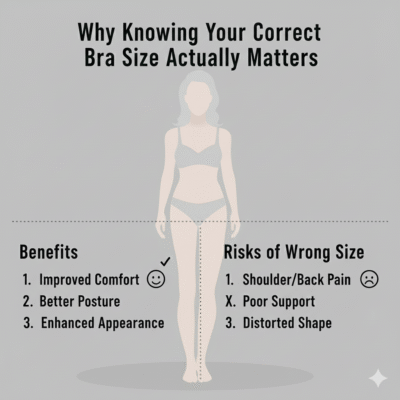
Wearing the wrong bra size isn’t just a minor inconvenience — it can affect your body, comfort, and posture every single day. A poorly fitted bra fails to provide proper support, which often leads to ongoing fit issues that many women assume are “normal.”
Common problems caused by incorrect sizing include:
-
Back and shoulder pain due to a lack of band support
-
Breast discomfort from cups that are too small or too large
-
Straps digging into shoulders or constantly slipping
-
Poor posture caused by uneven weight distribution
-
Spillage or gaping that affects how clothes fit
Studies and lingerie experts consistently note that the band provides most of the support, not the straps. When the band size is wrong, the entire bra stops doing its job. Over time, this can contribute to muscle strain and chronic discomfort.
A correctly sized bra improves alignment, reduces pressure points, and supports natural movement. It’s not about aesthetics — it’s about wearing something that works with your body, not against it.
What You Need to Measure Your Bra Size at Home
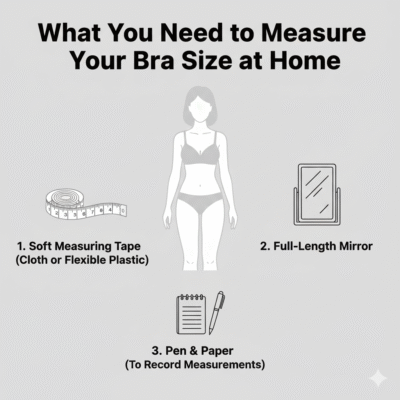
You don’t need professional equipment to get accurate measurements at home. Just gather a few basic items before you start.
Essentials:
-
Tape measure (flexible, fabric, or plastic)
-
Mirror to check positioning
-
Non-padded bra or no bra for accuracy
No tape measure? No problem.
If you don’t have a tape measure, use a string or ribbon. Wrap it around your body, mark the length, then measure it against a ruler or flat measuring tape.
Make sure you’re standing straight, relaxed, and breathing normally. Measuring over bulky or padded bras can distort results, so keep things simple for the most accurate numbers.
How to Measure Your Bra Size Step by Step
This is the core process — follow each step carefully and write down your measurements.
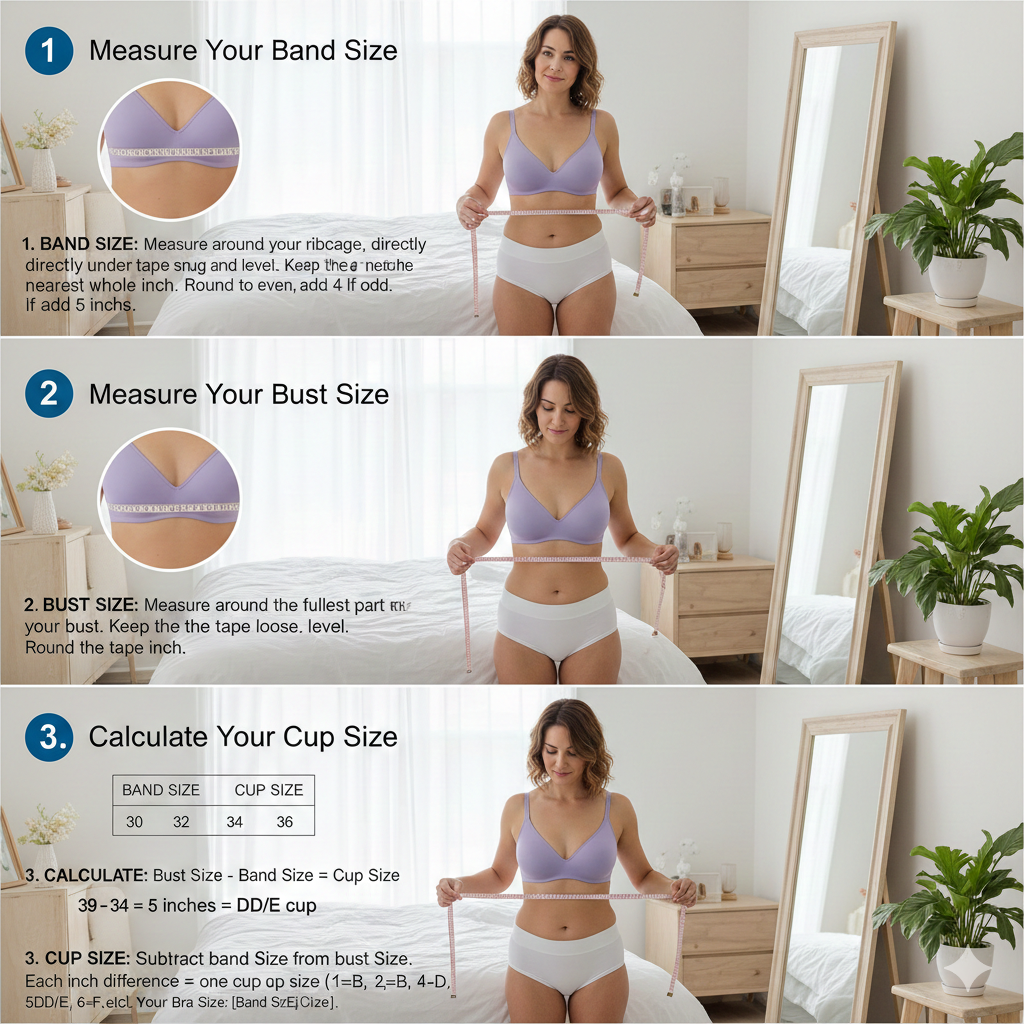
Step 1 – Measure Your Band Size
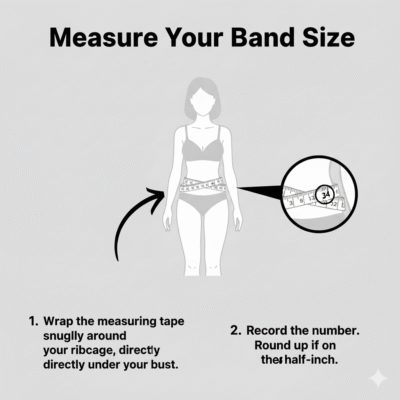
Your band size determines support.
-
Stand straight in front of a mirror
-
Wrap the tape around your ribcage, directly under your bust
-
Keep it snug but not tight — it should sit flat and level
This is your underbust measurement.
Round to the nearest whole number.
If the number is even, that’s usually your band size.
If it’s odd, round up to the next even number.
Step 2 – Measure Your Bust Size
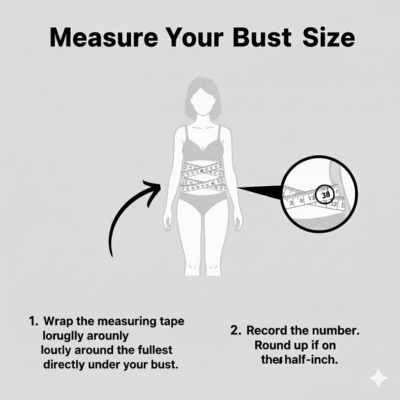
This measurement determines cup volume.
-
Wrap the tape around the fullest part of your bust
-
Keep your posture relaxed, shoulders down
-
Don’t compress the breasts — the tape should rest lightly
This number is your bust measurement.
Step 3 – Calculate Your Cup Size
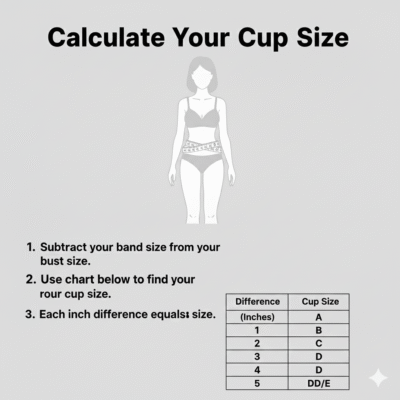
Now subtract your band size from your bust measurement.
Bust measurement − Band measurement = Cup difference
Use the chart below to find your cup size:
| Difference (inches) | Cup Size |
|---|---|
| 1 | A |
| 2 | B |
| 3 | C |
| 4 | D |
| 5 | DD / E |
Example:
If your bust is 37 inches and your band is 34 inches, the difference is 3 — that equals a C cup.
Bra Size Calculator: Quickly Find Your Size Online
If you prefer a faster method than manual measuring, a bra size calculator can help. These tools use your bust measurement and underbust measurement to determine your bra size in seconds.
Popular options include a bra size calculator in inches or metric versions. Simply enter your numbers, and the tool will determine your bra size calculator result instantly. Many calculators also show how to measure bra size calculator-style, offering step-by-step guidance for beginners.
Using a calculator is especially handy if you’re shopping online or want a quick cross-check of your at-home measurements. However, remember that brand variations can still affect fit, so treat calculator results as a starting point rather than the final answer.
Bra Size Chart (Quick Reference)
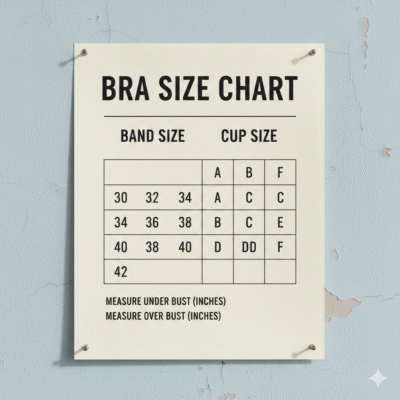
A bra size chart helps confirm your calculations and serves as a quick guide, especially when shopping online.
US sizing generally follows the same pattern, but brand variation is common. One brand’s 34C may feel different in another brand’s 34C due to materials and design.
Use charts as a starting point — not a final rule. Always prioritize how the bra feels on your body.
Band Size vs Cup Size (Most People Get This Wrong)
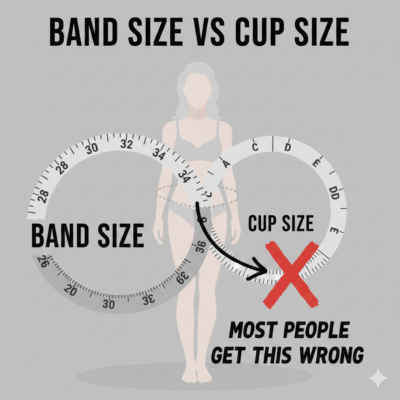
This is one of the biggest misconceptions in bra sizing.
-
Band size controls support
-
Cup size controls breast volume
A smaller band with a larger cup can hold the same volume as a larger band with a smaller cup. This is where sister sizes come in.
| Band Size | Cup Size | What It Controls |
|---|---|---|
| Snug fit | Breast volume | Support vs shape |
If your band feels tight but cups fit well, adjusting band size — not cup size — may solve the problem.
What Are Sister Sizes & When Should You Use Them?
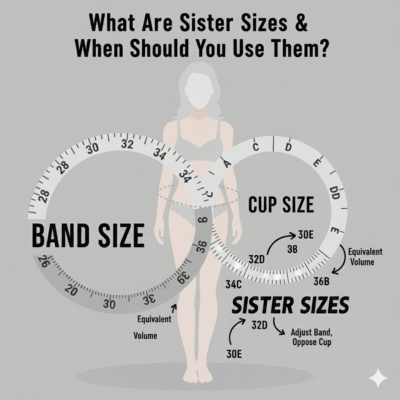
Sister sizes are bras with the same cup volume but different band sizes. They exist because bodies aren’t one-size-fits-all.
Common example:
-
34C → 36B → 32D
You might use sister sizes when:
-
Your band feels too tight, but the cups fit
-
A brand runs small or large
-
You’re between sizes
Sister sizing helps fine-tune comfort without changing breast coverage.
Signs You’re Wearing the 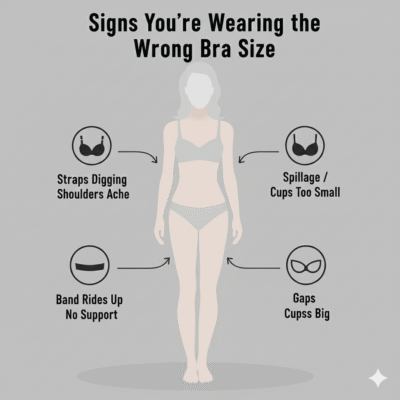
If your bra shows any of these signs, it’s likely not the right size:
-
❌ Gaping cups
-
❌ Breast spillage
-
❌ Straps digging into shoulders
-
❌ Band riding up your back
-
❌ Constant adjusting throughout the day
A well-fitted bra should feel secure, supportive, and forgettable — not something you’re constantly aware of.
How Often Should You Measure Your Bra Size?
Your body changes — and your bra size often changes with it.
Re-measure if you experience:
-
Weight change
-
Pregnancy or postpartum changes
-
Hormonal shifts
-
New or intense exercise routines
Simple rule:
If your body changes, your bra size probably did too.
At-Home Measurement vs Professional Bra Fitting
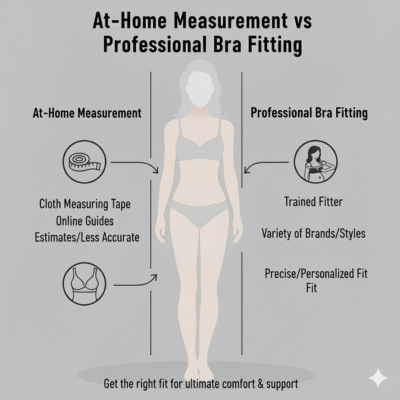
Knowing how to measure your bra size correctly at home can significantly improve the fit and comfort of your bras. Many women wear the wrong size for years without realizing it — not because they don’t care, but because bra sizing feels confusing, inconsistent, and overly technical.
| At Home | Professional Fitting |
|---|---|
| Free | Paid |
| Convenient | Highly accurate |
| Great for basics | Best for specialty bras |
At-home measuring is ideal for everyday bras and online shopping. Professional fittings are helpful for special styles or complex fit issues.
Common Bra Measurement Mistakes to Avoid
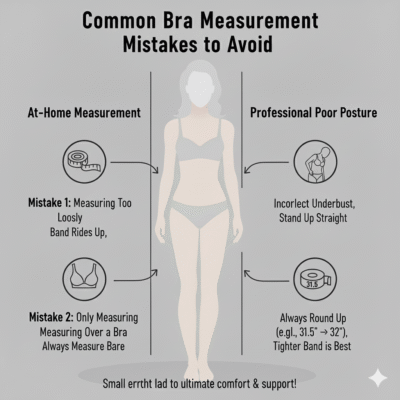
Avoid these errors for better accuracy:
-
Measuring over padded bras
-
Holding the tape too loosely
-
Ignoring band comfort
-
Measuring while slouching
Small mistakes can lead to big fit problems.
FAQs
Can I measure my bra size without a tape measure?
Yes, use a string or ribbon and measure it afterward.
What if my size falls between two cups?
Try sister sizes or choose based on comfort.
Do bra sizes change with age?
Yes, due to hormonal and body changes.
Why does my bra size vary by brand?
Design, fabric, and sizing standards differ.
Is it normal to have different breast sizes?
Completely normal — most people do.
Conclusion
Learning how to measure bra size at home gives you control over comfort, support, and confidence. Re-measuring regularly, understanding sister sizes, and focusing on how a bra feels — not just the label — can dramatically improve your everyday wear.
Your body isn’t static, and your bra size shouldn’t be either. Choose comfort first, adjust when needed, and don’t be afraid to try what works best for you.