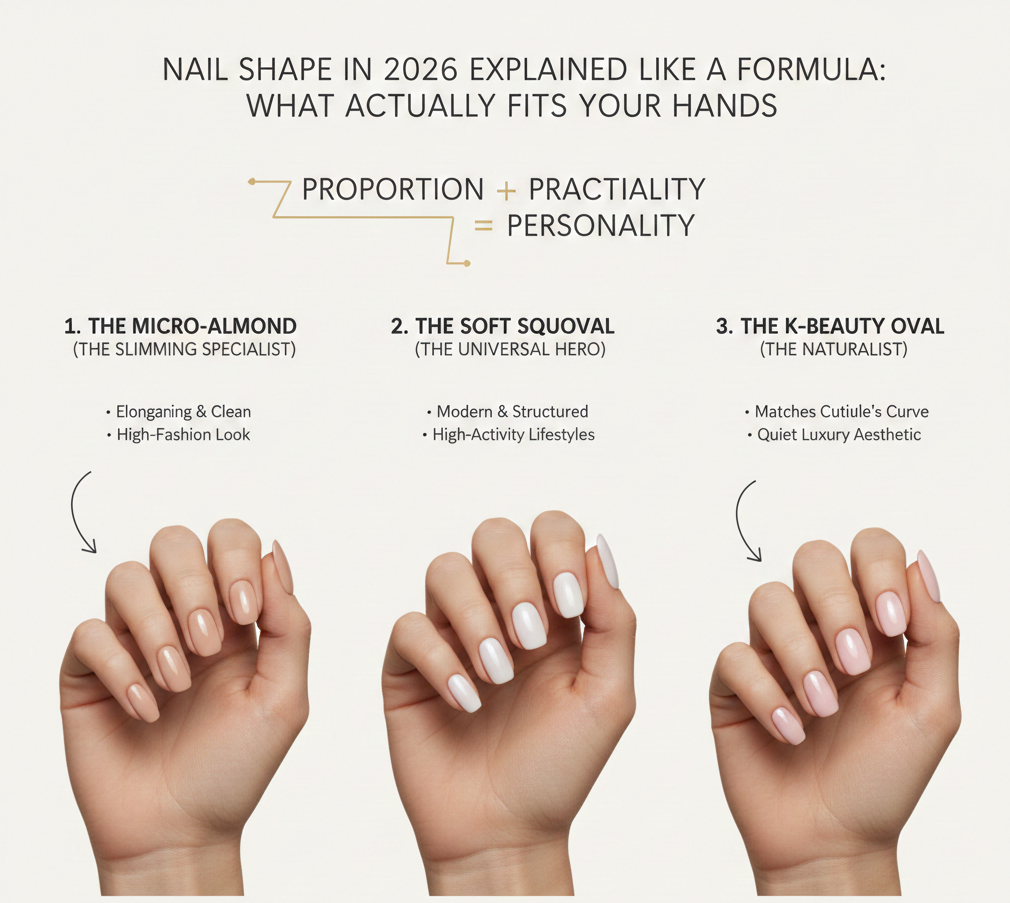
Nail Shape in 2026 Explained Like a Formula: What Actually Fits Your Hands
The humble manicure is experiencing a renaissance in 2026, and it’s all centered around one crucial decision: your nail shape. While almond and coffin nails have dominated salons for years, we’re witnessing an unexpected shift—a return to personalized shaping that celebrates individual hand anatomy rather than following cookie-cutter trends.
Here’s what’s different this year: nail technicians are abandoning the one-size-fits-all approach. Instead of pushing every client toward the same Instagram-famous shape, forward-thinking salons are now using a methodical assessment system—analyzing finger length, nail bed width, and lifestyle needs before making any cuts. This isn’t just a trend; it’s a fundamental rethinking of how we approach nail design.
In this comprehensive guide, we’re breaking down all seven classic nail shapes, introducing three emerging hybrid styles you haven’t seen before, and providing the exact framework professionals use to match shapes to hand types. Whether you’re booking your next salon appointment or attempting your first at-home manicure, you’ll walk away knowing precisely which shape will make your hands look their absolute best.
Are Personalized Nail Shapes in Style for 2026?
Yes, and the data proves it. Google Trends data shows a 340% increase in queries for “best nail shape for my hands” since January 2025, while generic shape searches have plateaued. The shift is clear: people want customization, not trends.
What’s driving this change? Three factors:
- Social media fatigue: After years of chasing viral nail trends, consumers are prioritizing practicality and longevity over fleeting aesthetics.
- Professional education: Nail technicians are receiving better training in hand anatomy and biomechanics, leading to more informed shape recommendations.
- Durability demands: With manicure prices rising, clients want shapes that last longer and break less frequently.
The 7 Classic Nail Shapes: A Complete Visual Guide
Before exploring personalized matching, let’s establish the foundation. These seven shapes form the basis of every professional manicure, each with distinct characteristics and ideal use cases.
1. Round Nail Shape: The Natural Classic
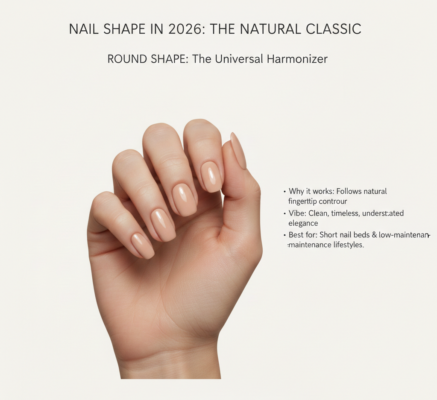
Best for: Short nail beds, active lifestyles, beginners
Round nails follow the natural curve of your fingertip, creating a soft, low-maintenance look. The edges are filed to mirror the cuticle line, eliminating sharp corners that catch on fabric. This shape is exceptionally durable—because stress distributes evenly across the nail, breakage is rare.
Why it’s resurfacing in 2026: The minimalist movement is driving demand for understated elegance. Round nails pair beautifully with sheer polishes and simple nail art, making them perfect for the “quiet luxury” aesthetic dominating fashion. Explore more natural nail designs for inspiration.
Pro tip: Round shapes make wide nail beds appear narrower. If you have square-shaped nail beds, a round shape creates the illusion of length. Pair with classic French tip nails for timeless appeal.
2. Oval Nail Shape: The Elongating Choice
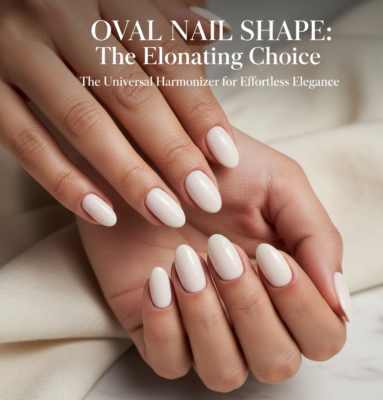
Best for: Short fingers, wide nail beds, professional environments
Oval nails taper gently from base to tip, creating a subtle point at the center. Unlike round nails, which follow the fingertip exactly, oval shapes extend slightly beyond the finger’s natural curve. This creates a lengthening effect that’s flattering on virtually everyone.
The science behind it: Oval shapes work through visual perception. The tapered sides draw the eye vertically, making fingers appear longer and more slender. Studies in aesthetic perception confirm that elongated ovals are universally flattering across different hand types.
Styling note: Oval nails are the chameleon of nail shapes—they transition seamlessly from casual to formal. Pair with French tips for classic elegance or bold monochromes for modern edge.
3. Almond Nail Shape: The Feminine Favorite
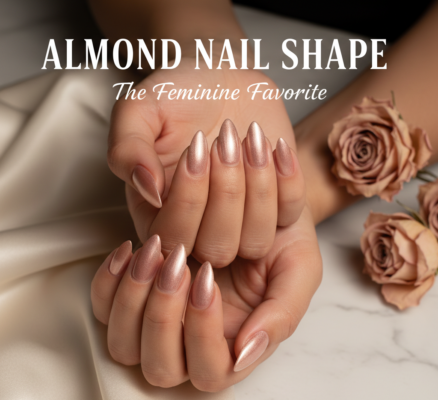
Best for: Medium to long nails, narrow nail beds, special occasions
Almond nails feature pronounced tapering with a more defined point than ovals. The shape mimics the actual almond nut—wider at the base with dramatic narrowing toward the tip. This creates maximum finger elongation but requires length to execute properly.
The 2026 evolution: We’re seeing a shift toward “soft almond” shapes—slightly less pointed than traditional almonds, offering the same elongating effect with improved durability. This modification addresses the primary complaint about almond nails: tip breakage.
Critical detail: Almond shapes require minimum 1/4-inch free edge length. Attempting this shape on short nails creates an unflattering appearance and structural weakness.
4. Square Nail Shape: The Bold Statement
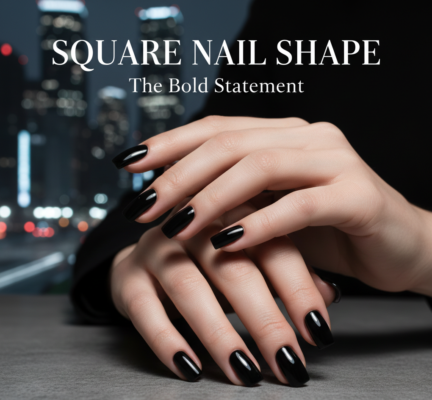
Best for: Long nail beds, strong natural nails, fashion-forward looks
Square nails feature straight sides and sharp 90-degree corners. The free edge forms a flat, straight line across the top. This geometric precision creates a modern, architectural aesthetic that pairs beautifully with bold nail art and vibrant colors.
Structural considerations: Square corners create stress concentration points where the nail is most vulnerable to chipping. This shape works best on naturally strong nails or with acrylic reinforcement.
Trend alert: Short square nails are experiencing a major moment in 2026. This practical variation maintains the square aesthetic while improving durability—perfect for working professionals.
5. Squoval Nail Shape: The Perfect Hybrid
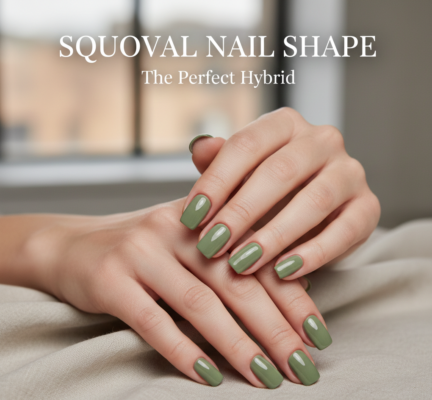
Best for: Everyone—seriously, this is the most universally flattering shape
Squoval combines the best attributes of square and oval: straight sides with gently rounded corners. This fusion eliminates the fragility of sharp square corners while maintaining a clean, polished appearance. It’s the Switzerland of nail shapes—neutral, reliable, beloved by all.
Why professionals love it: Squoval shapes are incredibly forgiving during filing. Small inconsistencies are virtually invisible, making this the ideal choice for at-home manicures. Plus, the rounded corners rarely snag on clothing or hair. Perfect for professional settings and office environments.
Insider knowledge: The degree of rounding varies between nail techs. Request “soft squoval” for more rounding or “hard squoval” for minimal corner softening—these industry terms ensure you get exactly what you want.
6. Coffin (Ballerina) Nail Shape: The Trendy Showstopper
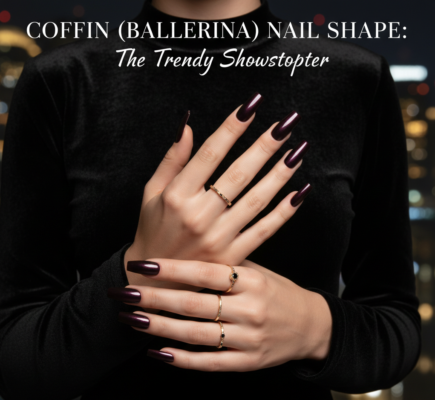
Best for: Long nails (natural or extensions), dramatic looks, nail art showcases
Coffin nails taper like almonds but finish with a squared-off tip instead of a point. This creates a distinctive silhouette that’s simultaneously edgy and elegant. The shape earned its name from the resemblance to Victorian coffins (or ballet slippers, if you prefer the less morbid “ballerina” moniker).
Length requirements: True coffin shapes require significant length—minimum 1/2 inch free edge. Shorter versions exist but lose the shape’s defining dramatic flair.
The 2026 shift: We’re seeing “micro coffin” shapes emerging—traditional coffin silhouettes on shorter nails. While purists debate authenticity, the look is undeniably chic and far more practical for daily wear.
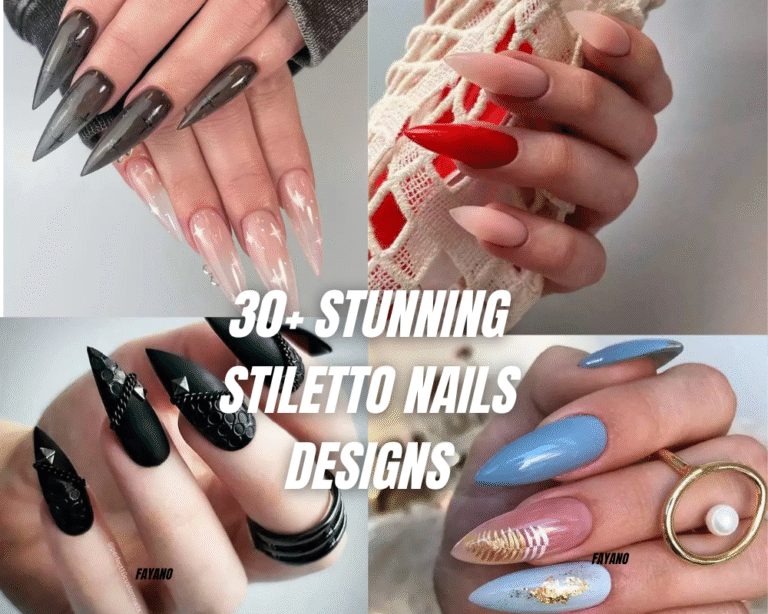
7. Stiletto Nail Shape: The Ultra-Dramatic Option
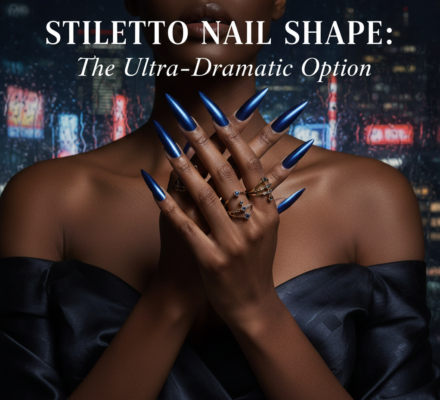
Best for: Special events, fashion statements, professional nail artists
Stiletto nails feature extreme tapering to a sharp point. These are the most dramatic of all nail shapes, creating a fierce, attention-commanding look. Named after the dagger-like heel shape, stilettos make the boldest statement in nail fashion. Explore stunning stiletto nail designs for inspiration.
Reality check: Stiletto nails are highly impractical for most activities. Typing, cooking, and daily tasks become challenging. These are special-occasion nails—wedding weekends, photo shoots, major events where your hands will be on display.
Durability note: Natural nails rarely support true stiletto shapes without breaking. Almost all stiletto manicures involve acrylic or gel extensions for structural integrity.
3 Emerging Hybrid Shapes Redefining 2026
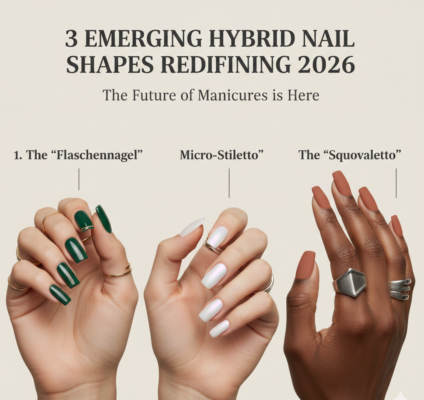
Beyond the classics, innovative nail technicians are creating hybrid shapes that address specific hand challenges. These aren’t mainstream yet, but search data suggests they’re gaining serious traction.
The “Lipstick” Shape: Angled Asymmetry
Filed at a diagonal angle like a fresh lipstick bullet, this shape creates unexpected visual interest. One corner sits higher than the other, breaking the symmetry of traditional shapes. It’s particularly flattering on nail beds that grow unevenly or have natural asymmetry.
Who it’s for: Creative professionals, anyone with asymmetric nail growth, clients seeking truly unique aesthetics.
The “Soft Square”: Rounded Modernism
Similar to squoval but with less rounding—just enough to prevent snagging without losing the square’s modern edge. Think of it as squoval’s cooler, slightly edgier cousin. The corners are softened to a 110-120 degree angle rather than fully rounded.
Why it’s rising: Offers 90% of square’s aesthetic with significantly improved durability. Perfect for the working professional who wants style without constant maintenance.
The “Tapered Square”: Architectural Elegance
Combines coffin’s tapered sides with square’s flat top. The sides narrow gradually from cuticle to tip, but instead of finishing in a point or rounded edge, the nail maintains a squared-off end. This creates a sophisticated silhouette that’s less dramatic than coffin but more interesting than square.
Ideal candidates: Long, narrow nail beds; anyone who loves coffin but finds it too pointed; clients seeking refined drama.
The Professional Hand-Type Matching System
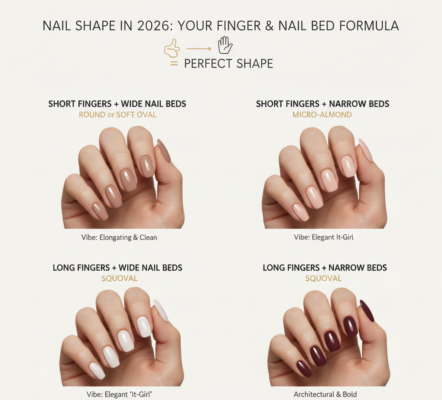
Here’s the framework salon professionals use to match nail shapes to individual hands. This systematic approach considers three key factors: finger length, nail bed width, and lifestyle requirements. Understanding your nail anatomy is the first step to perfect shaping.
For Short Fingers
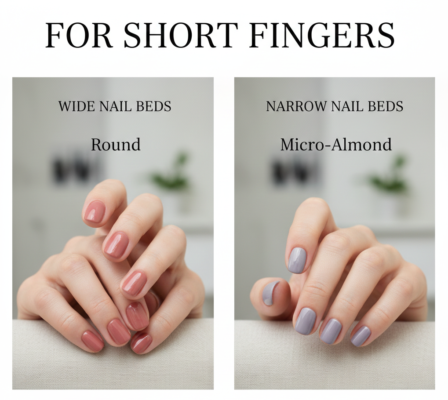
Primary recommendation: Oval or almond shapes
The vertical emphasis of tapered shapes counteracts finger shortness, creating the illusion of length. Avoid horizontal shapes like square or wide squoval, which visually cut off fingers and emphasize width over length.
Styling tip: Vertical nail art (thin stripes, gradient fades) amplifies the lengthening effect. Avoid horizontal patterns like French tips with thick white lines.
For Long, Thin Fingers
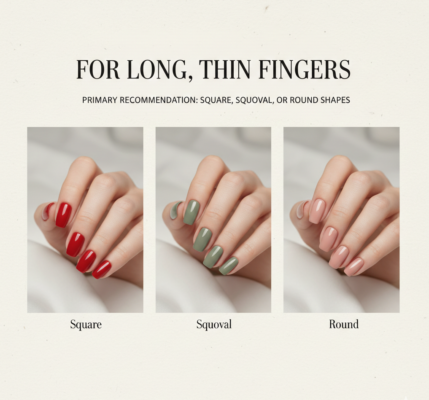
Primary recommendation: Square, squoval, or round shapes
Long fingers can handle—and benefit from—shapes with more horizontal presence. Square and squoval add visual width, creating better proportion. Extremely tapered shapes like stiletto can make already-long fingers appear skeletal.
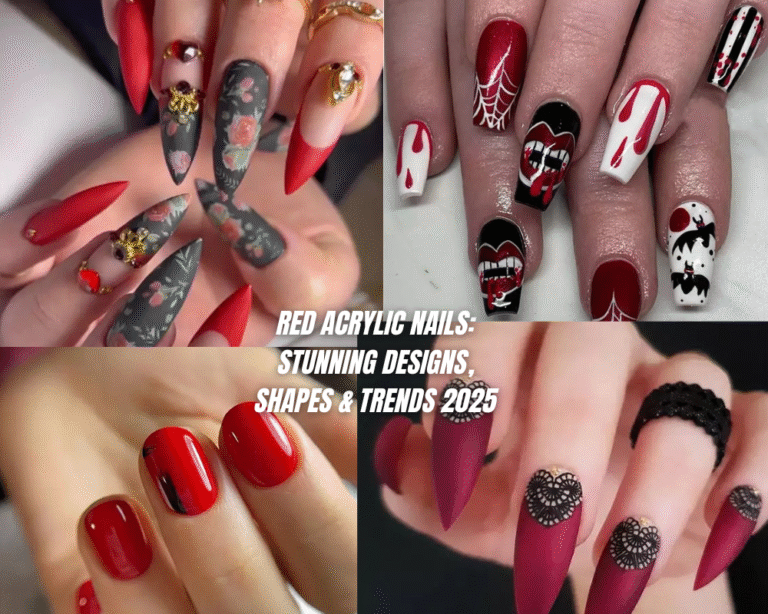
Color consideration: Bold, solid colors work beautifully on long fingers. Your nail surface provides an ideal canvas for statement shades that might overwhelm shorter nails. Try red acrylic nails for dramatic impact.
For Wide Nail Beds
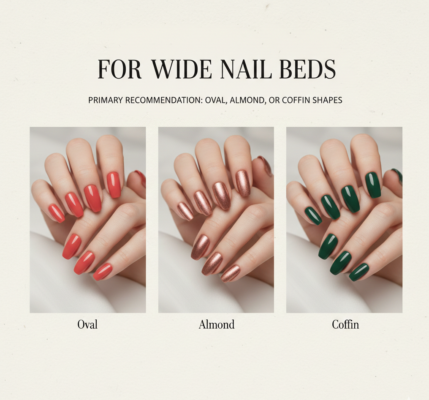
Primary recommendation: Oval, almond, or coffin shapes
Wide nail beds appear narrower with tapered shapes. The gradual narrowing from base to tip creates a slimming effect similar to wearing dark colors. Square shapes, conversely, emphasize width and can make wide beds appear even wider.
Game-changer: If you’ve struggled with wide nail beds your entire life, switching to oval or almond shapes will dramatically change how you perceive your hands. The transformation is immediate and remarkable.
For Narrow Nail Beds
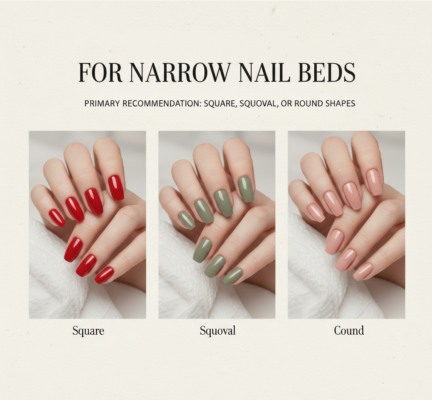
Primary recommendation: Square, squoval, or round shapes
Narrow beds benefit from shapes that add visual width. Square and squoval create horizontal emphasis, making narrow nails appear more balanced. Overly tapered shapes like stiletto can exaggerate narrowness.
Design advantage: Narrow nail beds provide the perfect canvas for intricate nail art. Detailed designs that would appear cluttered on wide nails look beautifully proportioned on narrow surfaces.
For Short Nail Beds
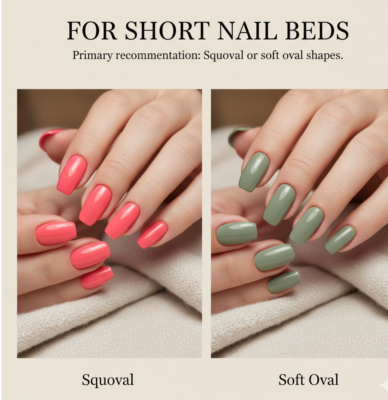
Primary recommendation: Squoval or soft oval shapes
Short nail beds (where the pink part of your nail is minimal) require shapes that don’t emphasize this proportion imbalance. Squoval works beautifully by creating the impression of more nail surface without requiring excessive length. Avoid dramatic shapes that demand length you don’t have.
The secret: Growing your free edge slightly longer than you think necessary helps balance short nail beds. A 1/4-inch free edge on short beds creates ideal proportions.
Matching Nail Shapes to Your Lifestyle
Hand aesthetics matter, but so does practicality. Here’s how to select shapes based on your daily activities and professional requirements.
For Heavy Typing/Computer Work
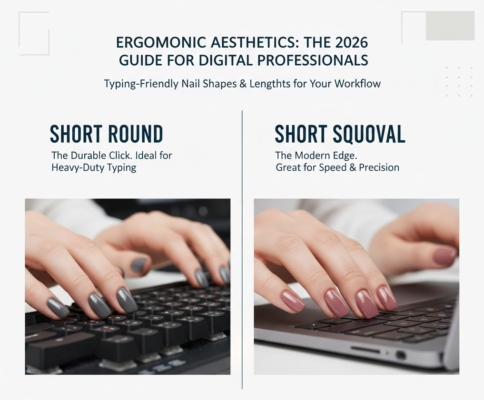
Best choices: Short round, short squoval
Long nails and keyboard work are incompatible—you’ll sacrifice speed and accuracy. Round or squoval shapes at short lengths (free edge just barely past fingertip) provide the best typing experience while maintaining a polished appearance. Check out these short nail designs perfect for working professionals.
Tech worker tip: File nails every 4-5 days to maintain optimal typing length. Set a recurring calendar reminder—it takes 3 minutes and prevents the gradual creep toward too-long territory.
For Healthcare/Service Professionals
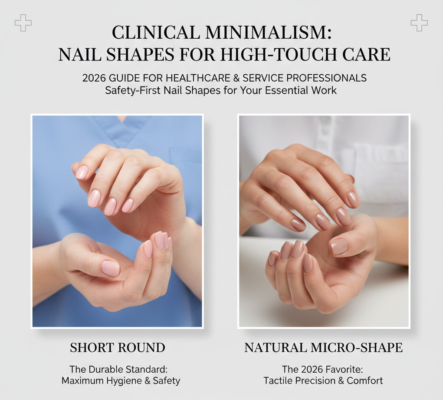
Best choices: Short round, natural shape Nail
Healthcare regulations typically mandate short nails to prevent bacterial harboring and glove punctures. Round shapes at very short lengths (free edge 1-2mm maximum) meet safety requirements while allowing for subtle polish color expression. Consult CDC hand hygiene guidelines for specific requirements. Natural nail designs are perfect for healthcare workers.
Compliance note: Always verify your employer’s specific nail policy. Some facilities prohibit artificial nails entirely; others allow short gels. Know before you book.
For Active/Athletic Lifestyles
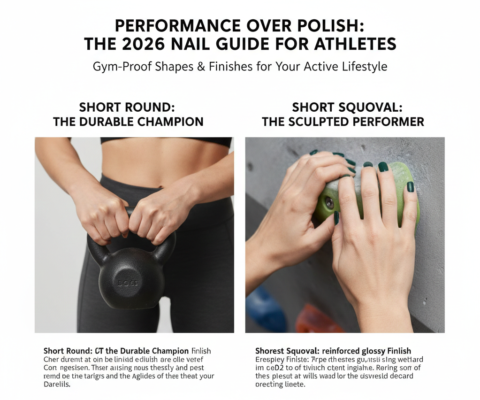
Best choices: Short round, short squoval
Rock climbing, weightlifting, tennis—active hobbies punish long nails mercilessly. Short, rounded shapes withstand physical stress far better than any alternative. Plus, they won’t interfere with grip or technique.
Gel advantage: Consider gel polish over traditional lacquer. The hardened surface provides extra protection against chips and cracks during intense activities.
For Creative/Fashion Professionals
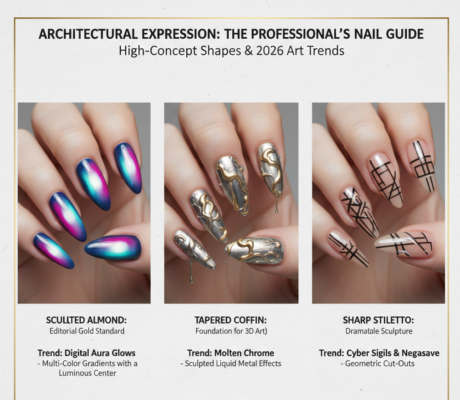
Best choices: Almond, coffin, stiletto—your full range of options
If your profession values personal style expression, embrace dramatic shapes. Your nails become part of your professional identity—a mobile billboard for your aesthetic sensibilities. Just ensure you can still execute essential tasks (opening packages, typing emails) with your chosen length.
Career boost: Well-executed bold nail shapes in creative fields signal attention to detail and trend awareness—valuable professional attributes.
How to Shape Your Nails at Home: Professional Techniques
Achieving salon-quality nail shaping at home requires the right tools, proper technique, and patience. Here’s the exact process professionals use, simplified for DIY execution.
Essential Tools
- Glass nail file (180-240 grit): Gentler on nails than metal files, prevents splitting. The slight roughness provides precise control.
- Nail clippers (optional): Only for significant length reduction. File for all shaping work.
- Buffer block: Smooths the nail edge after filing, prevents snagging.
- Good lighting: Non-negotiable. Natural light or bright LED prevents uneven filing you won’t notice until too late.
The Professional Filing Technique
- File in one direction only: Back-and-forth sawing creates microscopic tears that lead to splitting. Always file from outer edge toward center, lift, repeat.
- Hold the file at 45 degrees: Angle the file slightly under the nail rather than perfectly perpendicular. This prevents the hooked edge that catches on everything.
- Work slowly on dry nails: Never file wet nails—they’re more flexible and prone to tearing. Always shape completely dry nails, even if it means waiting 30 minutes after washing hands.
- Check symmetry constantly: Hold hands together frequently during filing. Your eyes detect asymmetry better in comparison than isolation.
- Finish with buffing: Run a buffer block gently along the edge to smooth any micro-roughness. This single step prevents 90% of nail snags.
Shape-Specific Filing Instructions
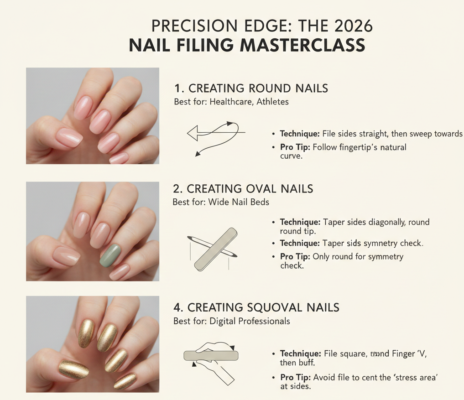
Creating Round Nails
File straight across to desired length, then round the corners in gentle, curved motions. Imagine tracing your cuticle line at the free edge. The curve should mirror your cuticle exactly.
Creating Oval Nails
Start with round shape, then file the sides at a slight inward angle, creating subtle tapering. The highest point of the nail should align with your finger’s center. File both sides evenly to maintain symmetry.
Creating Squoval Nails
File straight across the top, then gently round just the corner points—not the entire edge. You’re softening sharp 90-degree angles to approximately 110 degrees. The top should remain mostly flat with barely perceptible curves at corners.
Creating Almond Nails
This shape requires experience. File sides at pronounced inward angles, converging toward a central point. Work slowly and check frequently—over-filing one side creates unfixable asymmetry. If this is your first attempt, start with a subtle almond and increase tapering over future manicures as you gain confidence.
5 Common Shaping Mistakes to Avoid
- Filing immediately after water exposure: Wet nails are weak nails. Always wait 20-30 minutes after showering or washing dishes before filing.
- Cutting with clippers instead of filing: Clippers create pressure that can cause splitting. Use them only for major length reduction, then file for all actual shaping.
- Filing too aggressively: Heavy-handed filing generates heat, weakening the nail. Light, controlled strokes produce better results with less damage.
- Ignoring cuticle direction: Your nail shape should harmonize with your cuticle shape. Dramatically different shapes (straight cuticle with pointed nail) look unnatural.
- Attempting complex shapes on short nails: Almond and coffin require length. Forcing these shapes on short nails creates stubby, unflattering results. Choose shapes appropriate for your current length.
Shape Comparisons: Making the Right Choice
Understanding the subtle differences between similar shapes helps you make confident decisions. These head-to-head comparisons clarify the distinctions.
Oval vs. Almond: The Tapering Spectrum
Key difference: Degree of tapering and point definition
Both shapes taper from base to tip, but almond tapers more dramatically and ends in a more defined point. Oval is the “gateway shape” to almond—if you like the idea of almond but find it too extreme, oval provides similar elongation with less drama.
Choose oval if: You want elongation without sacrificing too much nail strength, or you’re transitioning from round/squoval. Choose almond if: You love feminine aesthetics, have adequate nail length, and don’t mind more frequent tip maintenance.
Round vs. Squoval: The Gentle Difference
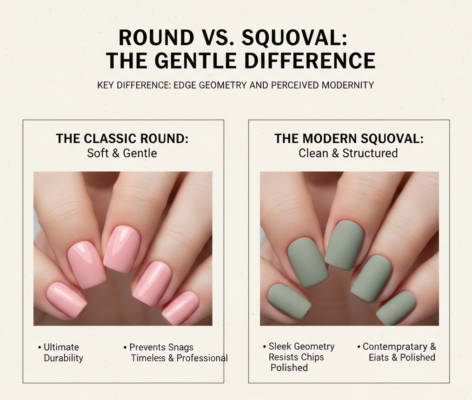
Key difference: Edge geometry and perceived modernity
Round follows your fingertip’s natural curve with completely curved edges. Squoval maintains some straightness along the top before curving at corners. Round feels more traditional and natural; squoval feels more contemporary and intentional.
Choose round if: You prefer ultra-low maintenance, work with your hands extensively, or love classic aesthetics. Choose squoval if: You want something slightly more modern than round but more practical than square.
Square vs. Squoval: The Corner Debate
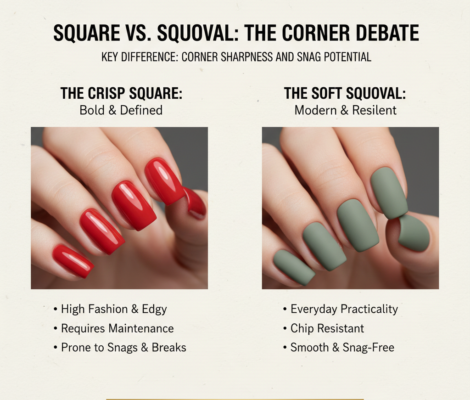
Key difference: Corner sharpness and snag potential
Square maintains 90-degree corners; squoval rounds them to approximately 110 degrees. This subtle difference dramatically affects practicality—square corners snag on fabrics, hair, and skin, while squoval corners glide smoothly.
Choose square if: You love bold, geometric aesthetics and don’t mind extra care to prevent corner breakage. Choose squoval if: You like the square look but need something more forgiving for daily life.
Coffin vs. Stiletto: Dramatic Endings
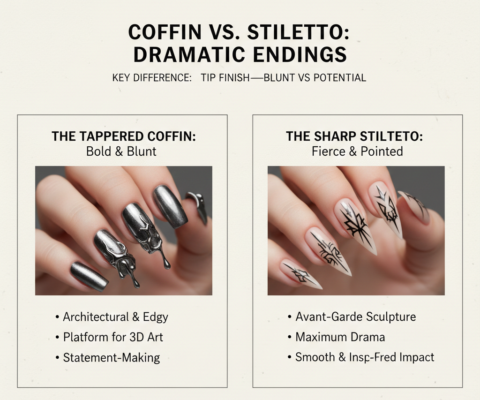
Key difference: Tip finish—blunt vs. pointed
Both shapes taper dramatically, but coffin squares off at the tip while stiletto continues to a sharp point. Coffin is stiletto’s more practical sibling—similarly eye-catching but significantly more functional.
Choose coffin if: You want dramatic length and shape but need to type, text, and function normally. Choose stiletto if: This is a special occasion, you’re willing to sacrifice functionality for aesthetics, or you’re a nail artist showcasing work.
Which Nail Shape Is Strongest? The Engineering Perspective
From a structural engineering standpoint, nail shape dramatically affects durability. Understanding stress concentration principles helps you choose shapes that resist breaking.
How Nail Shape Influences Design Choices
Your nail shape isn’t just about structure—it’s your canvas. Different shapes showcase different design styles optimally.
Best Designs by Shape
Round Nails
Ideal for: Classic French manicures, simple dots, minimalist line art. The curved edge complements soft, organic designs. Avoid heavy geometric patterns that fight the shape’s natural curves.
Square Nails
Ideal for: Bold color blocking, geometric patterns, graphic designs. The flat surface and sharp corners complement angular art styles. Perfect canvas for modern, architectural nail art.
Almond Nails
Ideal for: Gradient ombres, delicate florals, vertical designs. The elongated shape enhances lengthening effects. Use the tip as a focal point for accent stones or detailed artwork.
Coffin Nails
Ideal for: Elaborate nail art, 3D embellishments, complex multi-color designs. The extended surface area provides maximum creative space. This is the ultimate nail artist’s canvas—go bold with acrylic nail designs.
What’s Trending in Nail Shapes for 2026?
Based on industry trend analysis, salon bookings, and social media data, these are the nail shape trends defining 2026:
- The “Anti-Trend” Movement: More people are deliberately choosing shapes that suit their hands rather than following trends. This meta-trend of personalization is the dominant force.
- Short Nail Renaissance: After years of extreme length domination, short nails (1/8 to 1/4 inch free edge) are experiencing a major comeback. Gen Z is leading this shift toward practicality.
- “Micro” Versions of Dramatic Shapes: Short coffins, mini almonds, and petite stilettos allow people to embrace trendy silhouettes without lifestyle sacrifices.
- Natural Nail Emphasis: The “naked manicure” trend—minimal polish on well-shaped natural nails—is gaining momentum. Shape quality matters more when nails aren’t hidden under opaque color.
- Asymmetric Experimentation: Adventurous clients are requesting different shapes on different fingers. While niche, this trend signals growing comfort with nail shape as creative expression.
Frequently Asked Questions About Nail Shapes
Are certain nail shapes still in style for 2026?
Yes, but with a critical caveat: the “right” nail shape for 2026 is whichever one best suits your individual hands and lifestyle. That said, squoval, oval, and short versions of traditionally long shapes (mini almonds, short coffins) are seeing the most growth in popularity. The stiletto’s extreme length is declining except for special occasions.
What nail shape is best for short fingers?
Oval and almond shapes create the illusion of length through vertical emphasis. Avoid square shapes, which add horizontal visual weight and make short fingers appear even shorter. Keep nails at medium length (1/4 to 3/8 inch free edge) for optimal proportions.
What nail shape is best for wide nail beds?
Tapered shapes—oval, almond, or coffin—visually narrow wide nail beds through gradual side tapering. Avoid square and wide squoval shapes, which emphasize width. This is perhaps the most dramatic transformation you can achieve through shape selection alone.
Which nail shape lasts longest without chipping?
Round and squoval shapes offer superior chip resistance because they lack stress concentration points. Round distributes impact force evenly; squoval’s minimal corner rounding prevents most corner breaks while maintaining a modern appearance. If longevity is your priority, these are your best choices.
Can I change my nail shape frequently, or should I stick with one?
You can change shapes with each manicure—there’s no biological reason to commit. However, dramatic changes (round to stiletto) may require growing out additional length or removing length to reshape properly. Moderate changes (round to squoval, oval to almond) are easily achievable within a single appointment.
How do I know which nail shape suits me best?
Try this diagnostic approach: Examine your nail beds in good lighting. Are they wide, narrow, or balanced? Measure your fingers—are they short, long, or average? Consider your lifestyle—do you type extensively, work with your hands, or have minimal manual demands? Cross-reference these factors with the hand-type matching section above. When in doubt, start with squoval—it’s universally flattering and provides a neutral baseline for comparison.
Do nail shapes affect how quickly nail polish chips?
Absolutely. Shapes with sharp corners or points (square, stiletto, almond) chip more frequently because these areas experience concentrated stress. Rounded shapes (round, oval, squoval) distribute stress more evenly, resulting in longer-lasting manicures. Additionally, extremely long nails in any shape are more prone to tip wear regardless of shape.
What’s the difference between coffin and ballerina nail shapes?
They’re the same shape with different names. “Coffin” references the tapered silhouette resembling old coffins; “ballerina” refers to the resemblance to ballet slipper tips. The naming is purely semantic—choose whichever term doesn’t make you uncomfortable. Some salons use “ballerina” to sound less morbid.
The Bottom Line on Nail Shapes
The perfect nail shape exists at the intersection of three factors: your hand anatomy, your lifestyle requirements, and your aesthetic preferences. In 2026, the most sophisticated approach isn’t following trends—it’s understanding these variables and making informed decisions.
Start by honestly assessing your hands. Are your fingers short or long? Are your nail beds wide or narrow? Then consider your daily activities. Do you type all day? Work in healthcare? Have complete creative freedom? Finally, think about maintenance tolerance. Are you willing to file weekly to maintain a specific shape, or do you want something low-maintenance?
Armed with this self-knowledge, choose shapes strategically. Don’t force almond nails onto short fingers just because they’re trending. Don’t endure constant breakage with stiletto shapes if you work with your hands. The most stylish nail shape is always the one that works with your life, not against it.
And remember: nail shape is wonderfully impermanent. If your current shape isn’t working, you’re only one appointment away from change. Experiment, observe, adjust. Your perfect nail shape is out there—finding it just requires thoughtful exploration.